
Introduction
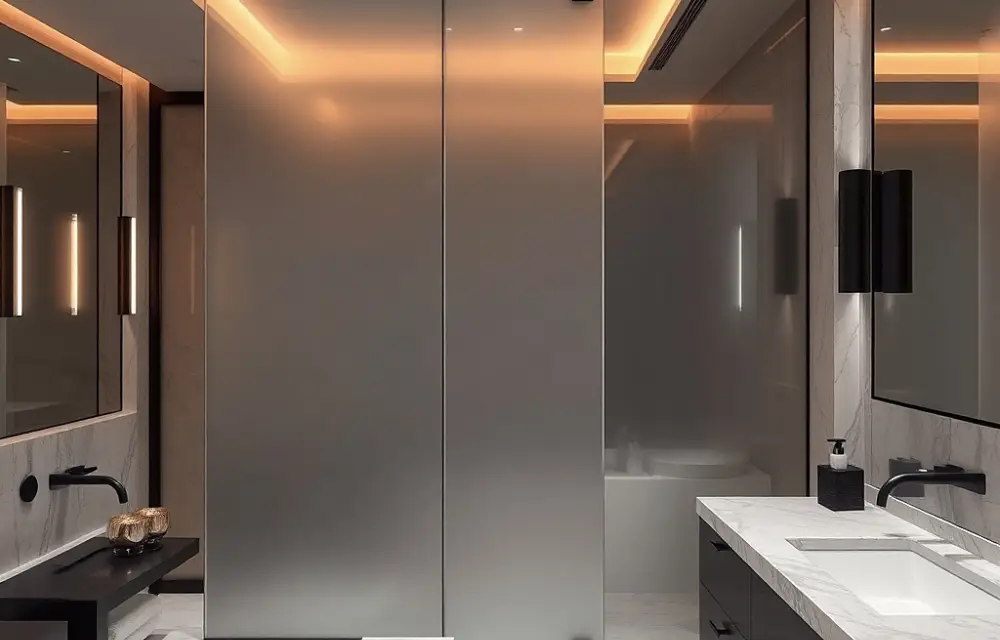
Smart glass — glass that can change its light transmission properties on demand — has evolved from a premium novelty available only in the most high-budget projects to a commercially accessible technology that is increasingly being specified in Dubai’s residential, commercial, and hospitality developments. The ability to switch glass from transparent to opaque at the touch of a button — or automatically in response to sensors — transforms the design possibilities for spaces that require flexibility between openness and privacy. Smart Glass for Bathroom Privacy is one of the most widely recognized applications, but the technology’s potential extends far beyond bathrooms into offices, meeting rooms, healthcare facilities, and residential living areas.
Electrochromic Smart Glass
Electrochromic glass changes its tint in response to a low-voltage electrical current. When voltage is applied, ions migrate within the electrochromic layer, changing its light transmission properties from clear to a range of tinted states. The transition is gradual — typically taking one to several minutes to complete — and the glass can be set to any intermediate state between fully clear and its darkest tint. This gradual transition and ability to achieve intermediate states makes electrochromic glass particularly suitable for solar control applications — reducing glare and solar heat gain in glazed facades without completely blocking the view.
Electrochromic glass maintains its tinted or clear state without continuous power consumption — only switching states requires current, which means it is energy-efficient in use. This is a significant advantage for large-scale facade applications where power consumption for the glass itself must be considered.
PDLC Smart Glass
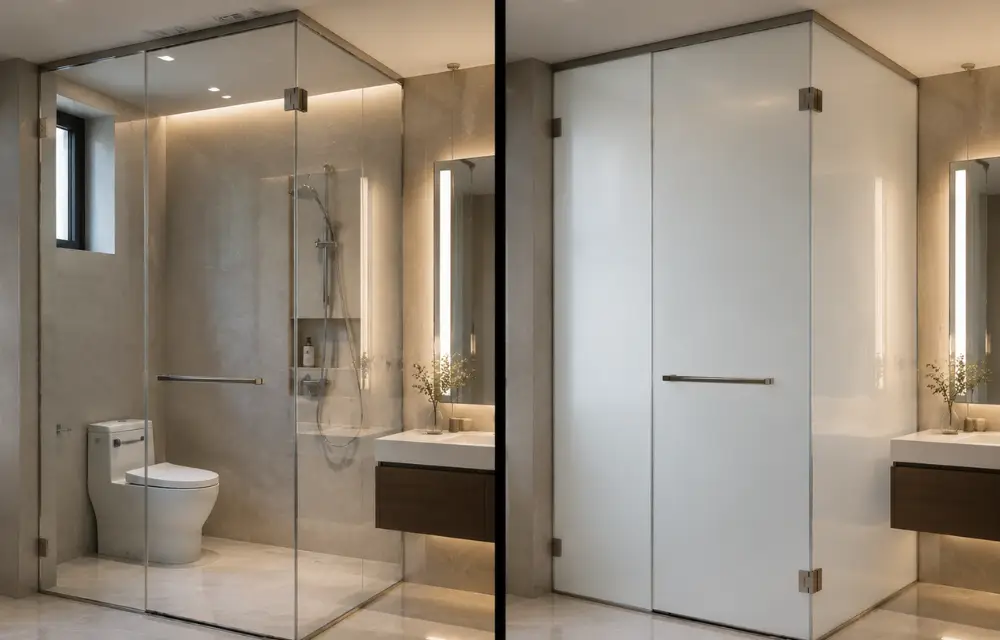
Polymer Dispersed Liquid Crystal (PDLC) technology is the most widely used smart glass type for privacy applications — including Smart Glass for Bathroom Privacy — in Dubai’s residential and commercial markets. In PDLC glass, liquid crystal droplets are suspended in a polymer matrix between two conductive glass layers. When no voltage is applied, the liquid crystals are randomly oriented, scattering light and making the glass appear milky white and opaque. When voltage is applied, the crystals align parallel to the electric field, allowing light to pass through — the glass becomes clear.
PDLC smart glass switches almost instantaneously between opaque and clear states — the transition takes less than a second, which makes it ideal for privacy applications where immediate switching is required. It can be integrated into double-glazed units, laminated into existing glass panels, or applied as a switchable film to existing glass surfaces. For Smart Glass for Bathroom Privacy in particular, the instant switching and complete opacity in the off-state provide genuine privacy assurance.
SPD Smart Glass
Suspended Particle Device (SPD) technology uses electrically active particles suspended in a thin film between glass panels. In the unpowered state, the particles are randomly oriented and absorb light, making the glass dark. When voltage is applied, the particles align, allowing light to pass through and making the glass clear. SPD glass offers a very wide range of light transmission adjustment and responds quickly to voltage changes, making it suitable for dynamic solar control applications.
Also Read – How Can Smart Glass Boost Privacy Without Blocking Natural Light?
Integration with Building Automation Systems
One of the most significant recent advancements in smart glass technology is the maturation of integration with building automation and smart home systems. Smart glass panels can now be controlled through voice assistants, smartphone apps, automated scheduling systems, and sensor-triggered responses to light levels or occupancy. In a smart office building, for instance, meeting room smart glass partitions can automatically switch to opaque when a meeting is scheduled and return to clear when the room is vacant.
Conclusion
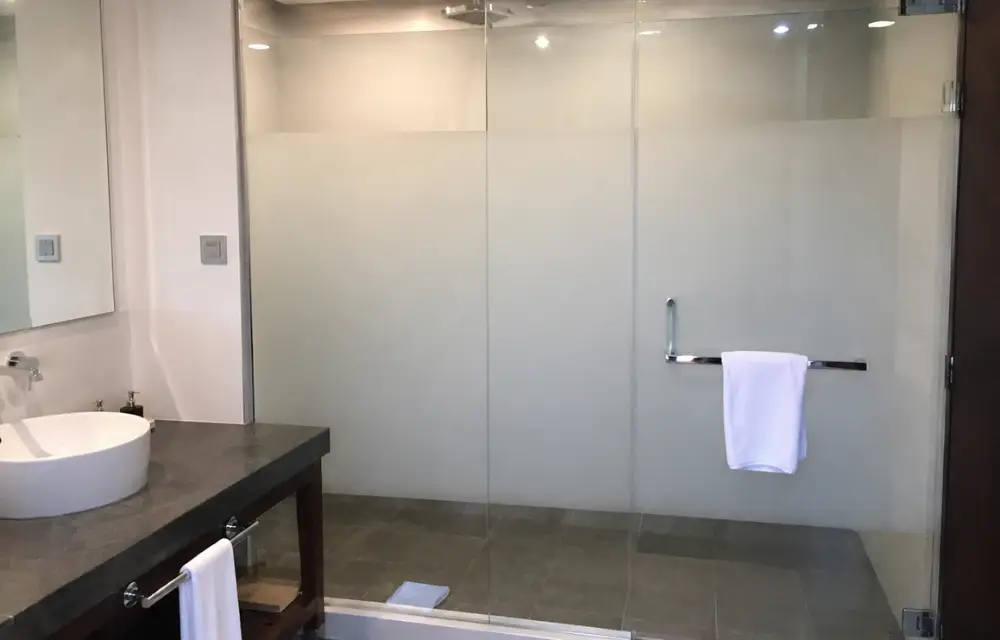
The latest advancements in smart glass technology — electrochromic solar control glass, instant-switching PDLC for Smart Glass for Bathroom Privacy and meeting room applications, and SPD dynamic shading — are making this transformative technology accessible and practical for a wide range of Dubai residential and commercial projects. Integration with building automation systems extends the functionality further, allowing smart glass to contribute actively to energy efficiency and occupant comfort management.